Price sensitivity research explains how customers respond when prices change and why some buyers react strongly while others barely notice. In 2026, pricing pressure, choice overload, and economic uncertainty make this research less optional and more operational. Brands that understand pricing sensitivity avoid margin erosion, while those that guess often learn the hard way.
In this article, we break down price sensitivity research to clarify how pricing shifts affect customer decisions and what that means for long-term pricing strategy.
What is Price Sensitivity Research?
Price sensitivity research studies how changes in price influence purchase behavior. At its core, it answers a simple question: when the price shifts, do customers stay, hesitate, or walk away? The concept sounds basic, yet real-world behavior rarely is.
Two buyers can see the same price increase and react in opposite ways. That’s why price sensitivity research focuses on perception, context, and decision thresholds rather than price alone.
In marketing, price sensitivity reflects how buyers interpret value. A product that feels essential, trusted, or differentiated often shows lower price sensitivity. A product viewed as replaceable, risky, or unfamiliar usually triggers higher sensitivity. And that difference drives revenue outcomes.
What Price Sensitivity Really Measures (And What It Doesn’t)
The price sensitivity definition often gets oversimplified. It does not measure whether a price is “too high” in isolation. It measures how likely customers are to change behavior when prices move. That distinction matters.
Price sensitivity research captures tolerance, not opinion. Customers may say a price feels expensive, yet still buy. Others may say a price is fair and still defect. This is why pricing sensitivity analysis differs from basic feedback. It studies reactions across ranges, scenarios, and alternatives.
What it does not measure is profitability on its own. A price with low sensitivity may still fail if costs rise faster than demand. Likewise, a price-sensitive market can remain profitable if volumes compensate. Sensitivity data informs decisions; it does not replace judgment.
Why Some Markets Are Price Sensitive, and Others Aren’t
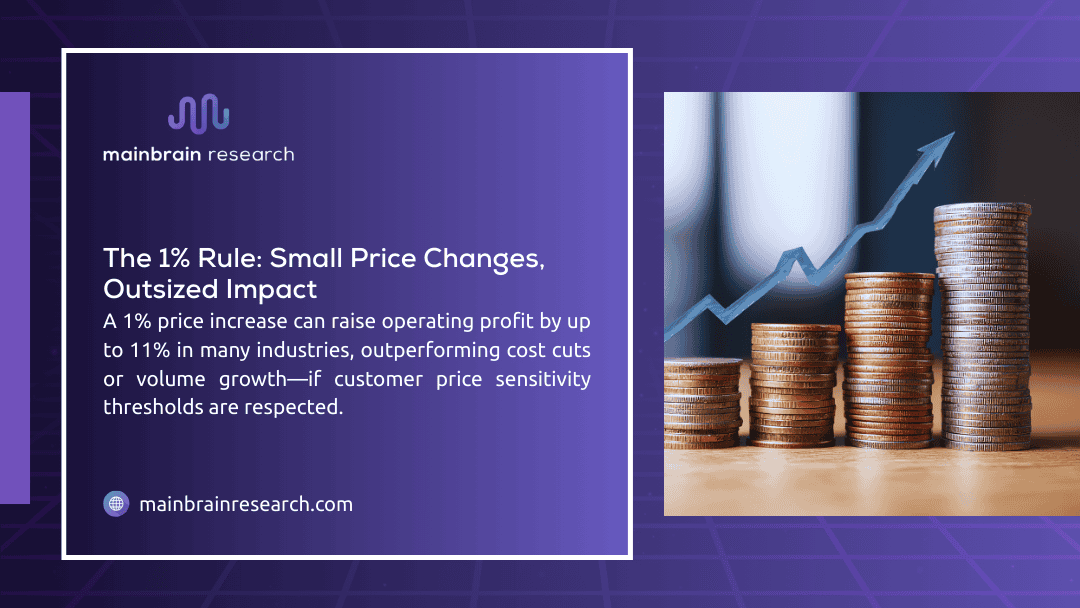
Target market price sensitivity depends on context more than demographics. When substitutes are abundant, sensitivity rises. When switching costs feel high, sensitivity drops. When buyers trust a brand, they tolerate price increases longer. When trust erodes, even small changes spark backlash.
Economic conditions also matter. Consumers will be more price sensitive when budgets feel constrained, uncertainty grows, or price comparisons become easier. Digital marketplaces amplify this effect by making alternatives visible in seconds. That’s why pricing sensitivity analysis must reflect current conditions, not last year’s assumptions.
Stronger brands experience more sensitivity to their pricing than many expect, not because loyalty disappears, but because expectations rise. Premium positioning raises scrutiny. When pricing contradicts perceived value, sensitivity spikes fast.
High and Low Price Sensitivity Across Product Types
Different products trigger different sensitivity patterns. The type of product or service shapes how buyers evaluate price changes.
| Product Category | Buyer Mindset | Typical Sensitivity | Pricing Risk |
| Commoditized goods | Comparison-driven | High price sensitivity | Volume loss |
| Everyday necessities | Habit-based | Moderate sensitivity | Gradual erosion |
| Premium brands | Value-anchored | Low to moderate | Perception damage |
| Subscription services | Commitment-driven | Low initially | Churn after hikes |
Low price sensitivity often appears where differentiation feels real and switching feels risky. High price sensitivity dominates when products feel interchangeable. Price sensitivity examples across industries show the same pattern repeating with different labels.
Customer Psychology Behind Pricing Sensitivity
Price sensitivity’s meaning becomes clearer when psychology enters the picture. Buyers rarely evaluate prices objectively. They compare against reference points formed by past purchases, competitor prices, and expectations. When a price crosses that internal reference, resistance kicks in.
Price laddering explains how buyers sort options into acceptable ranges. Once a product falls outside that ladder, demand drops sharply. This effect explains why small price changes sometimes cause disproportionate reactions.
Price-sensitive consumers also respond emotionally. Fear of overpaying, regret, or loss aversion intensifies sensitivity. That’s why reducing pricing sensitivity often depends more on communication and positioning than on discounts.
How to Measure Price Sensitivity Correctly
Price sensitivity measurement requires structure. Surveys alone often mislead because stated intent differs from actual behavior. Effective research designs simulate choice, trade-offs, and consequences.
Quantitative inputs matter, yet they work best alongside context from broader research. A solid foundation begins with understanding what market research is and how pricing fits within it, which helps avoid isolated data traps. This approach aligns pricing work with established market research methods rather than treating it as a standalone exercise.
Common Price Sensitivity Research Models Used Today
Several models dominate pricing sensitivity analysis, each with strengths and limits.
| Model | What It Measures | Best Use Case | Key Limitation |
| Van Westendorp | Acceptable price range | New products | Ignores competition |
| Gabor Granger | Purchase likelihood | Price testing | Overstates intent |
| Price laddering | Perceived tiers | Competitive markets | Needs context |
| Conjoint-based models | Trade-offs | Complex offers | Higher cost |
Van Westendorp pricing remains popular for early-stage decisions, while Gabor Granger pricing works well for established offers. The Westendorp price sensitivity meter identifies thresholds, not profit-maximizing prices. That distinction often gets lost.
How to Calculate Price Sensitivity Without Oversimplifying
Many ask how to calculate price sensitivity as if a single formula exists. In practice, calculation depends on the model and the decision context. A commonly used measure of price sensitivity provides a relationship between price change and demand response, yet that relationship shifts by segment.
Price sensitivity calculation works best when segmented. Buyer price sensitivity differs between loyal and first-time customers. Aggregated averages hide these differences and mislead pricing decisions. Sensitive price thresholds matter more than neat equations.
Price Sensitivity vs Price Elasticity: Why They’re Not Twins
Although the terms often appear interchangeable, price sensitivity and price elasticity describe different aspects of how customers respond to pricing changes.
| Aspect | Price Sensitivity | Price Elasticity |
| Core focus | Buyer perception of price changes | Measured change in demand due to price |
| Nature | Psychological and behavioral | Mathematical and economic |
| What it explains | Why do customers react to a price shift | How much demand shifts after the change |
| Data source | Research studies, surveys, behavioral inputs | Sales data and historical pricing |
| Time orientation | Forward-looking and predictive | Retrospective and observational |
| Use in pricing | Guides price setting and positioning | Evaluates the impact after pricing decisions |
| Risk if misused | Misreading buyer tolerance | Overconfidence in numerical outputs |
Understanding both concepts together prevents misinterpretation, as elasticity shows outcomes while sensitivity explains the reasoning behind them.

Target-Market Price Sensitivity in Competitive Environments
When alternatives feel similar, even loyal customers become price sensitive. When differentiation feels real, price becomes secondary.
| Market Condition | Buyer Behavior | Sensitivity Risk | Pricing Implication |
| Many substitutes | Comparison shopping | High | Narrow margins |
| Few alternatives | Risk avoidance | Low | Pricing power |
| Rapid innovation | Uncertainty | Rising | Flexible pricing |
| Strong brand equity | Trust-based | Moderate | Value reinforcement |
Explain the pricing factor of target-market price sensitivity carefully. It reflects perceived risk, not just affordability. Cost sensitivity often masks deeper value concerns.
Mistakes That Ruin Price Sensitivity Research
Errors often stem from shortcuts. Price sensitivity survey questions framed without trade-offs inflate optimism. Treating all customers as equally price sensitive ignores behavioral reality. Confusing price sensitive definition with elasticity leads to false confidence.
Another mistake lies in isolation. Pricing research detached from broader quantitative market research misses drivers that explain why sensitivity exists. Integration matters.
How Businesses Use Price Sensitivity Research to Set Profitable Prices
Effective teams use research to identify acceptable price ranges, then test optimal price points within those bounds. The goal is not the lowest resistance but the highest sustainable return.
Price sensitivity analysis helps anticipate reactions to price increases, adjust communication, and reduce pricing sensitivity through value cues. When aligned with how to do market research properly, pricing decisions gain resilience.
Why Price Sensitivity Research Works Best With Market Research
Pricing does not live alone. It interacts with brand perception, competition, and demand drivers. That’s why linking pricing work with insights from primary market research and secondary market research strengthens interpretation.
Teams that connect pricing sensitivity analysis with why market research is important avoid narrow conclusions. This integration explains not just what customers do, but why they do it.
Conclusion:
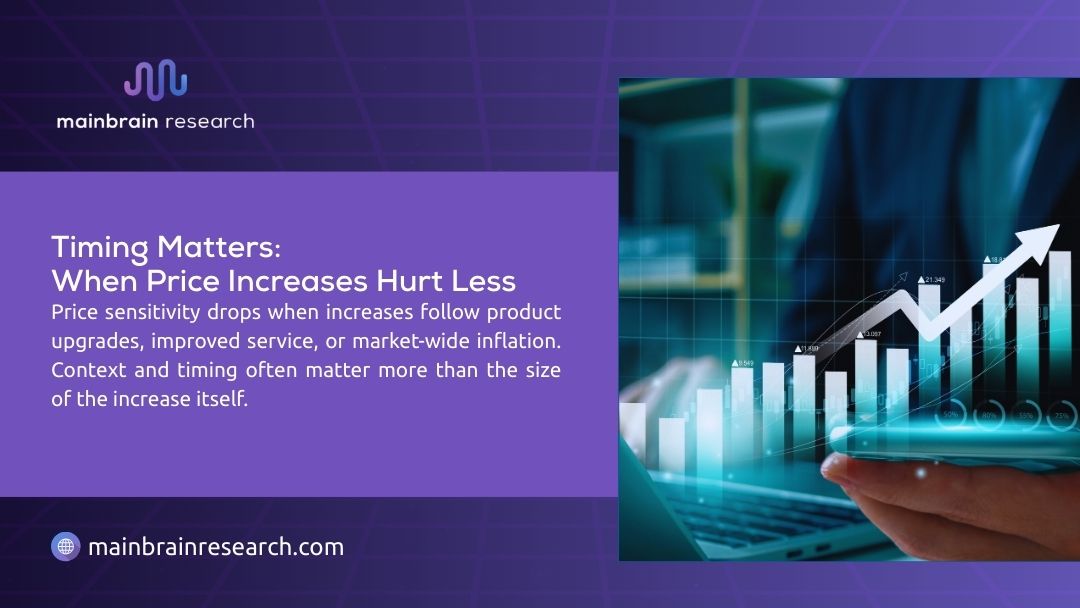
Markets grow noisier, not calmer. Price sensitivity rises where trust weakens, and clarity fades. Static pricing models struggle under constant comparison. Continuous price sensitivity research offers early warning before revenue slips.
Brands that treat pricing as a conversation, not a command, adapt faster. Those who rely on assumptions react late.
Pricing choices shape perception long before they shape revenue. Understanding customer price sensitivity keeps those choices grounded in reality rather than hope. When pricing decisions feel uncertain, working with a research partner like MainBrain Research can bring structure to that uncertainty, using behavioral insight, predictive analytics, and proven pricing models to identify where buyers draw the line and how pricing can move forward with confidence. If your pricing strategy needs clarity, direction, or validation, this is where informed research starts to pay for itself.