Let’s face it, most companies are still guessing when it comes to pricing. They either pull a number from thin air, copy their competitors, or slap a “premium” label on a product and hope people buy it anyway. It’s like throwing darts blindfolded and calling it strategy. Yet pricing is the one thing that directly impacts everything: your brand perception, customer trust, sales volume, and profit margins.
You can have the most brilliant marketing team and the slickest website on the planet, but if your pricing doesn’t align with how customers perceive your value, you’re losing before you even start. This is exactly why the Van Westendorp pricing model has quietly become one of the most practical tools in modern market research.
Developed by Dutch economist Peter Van Westendorp, this model isn’t a trendy AI gimmick; it’s an enduring research method that’s still used by experts at MainBrain Research to uncover data-backed pricing insights. It works because it does what most companies forget to do: ask people how they feel about prices, not what they think they should feel.
At MainBrain Research, our Pricing & Behavioral Insights Division has used this approach across industries, combining behavioral science and AI-driven analytics to uncover actionable patterns. Once brands understand what their customers actually believe is fair, they stop guessing and start growing.
Why Everyone Gets Pricing Wrong
Pricing mistakes usually start with the questions you ask, or don’t. Companies love to ask, “Would you pay $99 for this?” and then treat that as gospel. The problem? People are terrible at predicting their future behavior. They’ll say they’d happily pay for “premium quality,” then scroll straight to the lowest-priced option.
Traditional pricing surveys often fail because they’re hypothetical. They tell you what people say, not how they really feel.
The Van Westendorp price sensitivity meter flips that logic. It replaces hypotheticals with feelings and reveals what consumers truly perceive as too cheap or too expensive. Instead of focusing on what people think they might do, it focuses on what their instincts have already decided. This approach captures real-world price psychology, the kind that drives actual purchases, not polite answers.
If you’re still relying on outdated methods, it’s worth reviewing what market research is to understand how consumer behavior has evolved beyond traditional surveys.
How the Van Westendorp Pricing Model Works
The Van Westendorp pricing questions are brilliantly simple. Instead of guessing what your customers want to pay, you ask them four variations of one question, each designed to reveal their emotional boundaries toward price.
You ask:
- At what price would the product seem so cheap you’d doubt its quality?
- At what price would it feel like a good value?
- At what price would it feel expensive but still acceptable?
- And at what price would it feel too expensive to buy?
These answers, when plotted as cumulative frequencies, generate overlapping curves. Where they intersect, you find key points: the point of marginal cheapness, the point of marginal expensiveness, the indifference price point, and the optimal price point.
Together, these intersections form your acceptable price range, the zone where customers believe your product is worth what it costs. The Van Westendorp analysis doesn’t just tell you what people might pay; it shows how their perception of value shifts with price.
For more on how survey structure impacts data accuracy, check out market research methods.
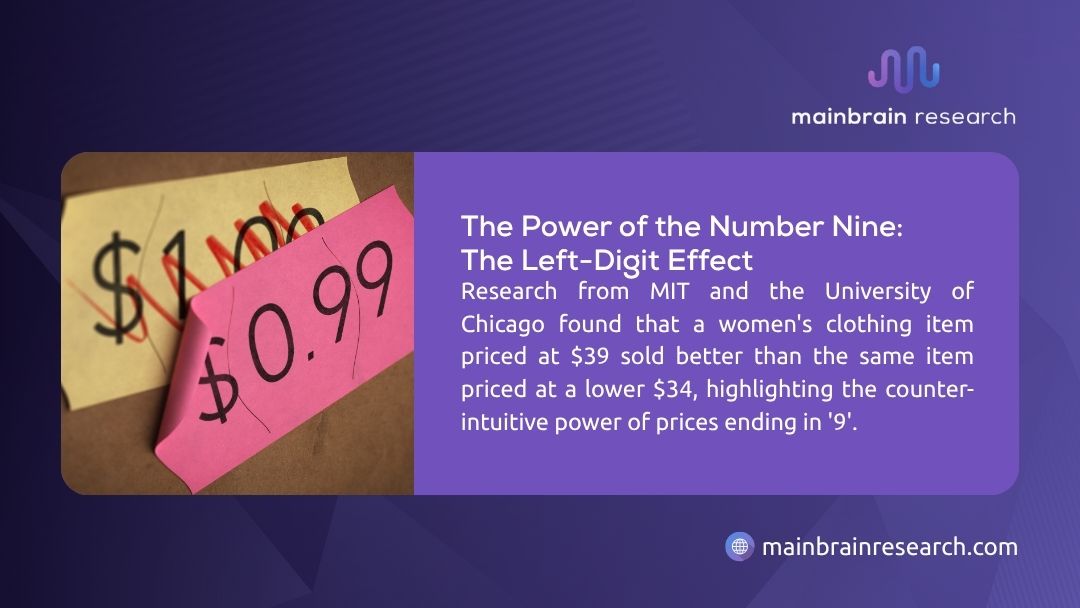
Real-World Impact: A Consumer Electronics Example
A consumer electronics company once came to MainBrain Research before launching a new pair of wireless earbuds. Their team had already decided on $99 as the “perfect” price point because it matched competitors.
Our price sensitivity survey told a different story. The data revealed that while $99 was still considered acceptable, the optimal price point, where value perception peaked, was around $79. Customers didn’t see $99 as unaffordable; they just saw it as “pushing it.”
By repositioning at $79 and emphasizing quality through messaging, the company increased conversions by 20% post-launch. That one insight, drawn from clean survey data and proper Van Westendorp pricing model application, changed their entire pricing strategy. If you’re exploring similar pricing validation studies, start with how to do market research.
Why Simplicity Beats Hypotheticals
The power of the Van Westendorp price sensitivity meter is in its simplicity. It doesn’t pretend to predict behavior through complex choice models. It just asks how prices feel, which is exactly how real buyers decide.
When a customer calls something “too cheap,” they’re not giving you feedback; they’re exposing their subconscious association between low price and low quality. When they call something “too expensive,” they’re saying it doesn’t feel worth it, not that they can’t afford it. These nuances make the model invaluable in understanding how consumers process value.
MainBrain takes this even further with AI-enhanced behavioral analysis, identifying micro-patterns in language and context that traditional research misses. That’s where real differentiation happens, interpreting what people mean, not just what they say.
To see where this approach fits among other pricing techniques, explore our Conjoint Analysis Market Research Guide.
Why Many Companies Fail at Van Westendorp
Running the model isn’t the same as understanding it. Too many brands collect Van Westendorp survey results from random samples or poorly worded forms and expect gold. Garbage in, garbage out.
The quality of your insights depends on the number of respondents, the accuracy of your target sample, and the neutrality of your questions. If your respondents aren’t real buyers or your phrasing anchors them toward certain prices, your analysis collapses.
At MainBrain Research, every pricing project starts with audience precision. We use verified consumer panels and real buyer data to ensure that the price sensitivity survey reflects real-world market behavior. You can read more about audience sampling in our guide to primary market research.
The Psychology of Price Perception
Price isn’t math, it’s meaning. Customers don’t calculate value; they feel it. A $40 price tag can seem cheap, fair, or premium depending entirely on how it’s presented and what it represents.
That’s why the Van Westendorp pricing model matters. It measures emotional reactions that financial models can’t. It shows how people interpret your price through the lens of trust, quality, and social expectation.
MainBrain uses behavioral neuroscience from our Revel program to decode this emotional logic. By combining brain science and pricing analytics, we help brands turn perception into performance. If your current research isn’t capturing this psychological layer, read why market research is important.
Case Example: When “Cheap” Kills Trust
A skincare company once hired us to figure out why their best-reviewed product wasn’t selling. Their assumption was simple: the lower the price, the higher the sales. They couldn’t have been more wrong.
After running a Van Westendorp survey, we discovered their point of marginal cheapness was actually higher than their selling price. Customers didn’t believe a “cheap” serum could deliver real results. Once they raised the price slightly and repositioned the brand around quality and results, sales rose 24% in three months.
It wasn’t about making more money; it was about aligning perception with value. The Van Westendorp analysis showed exactly where “affordable” crossed into “untrustworthy.” That’s the power of knowing your acceptable price range before launching a product.
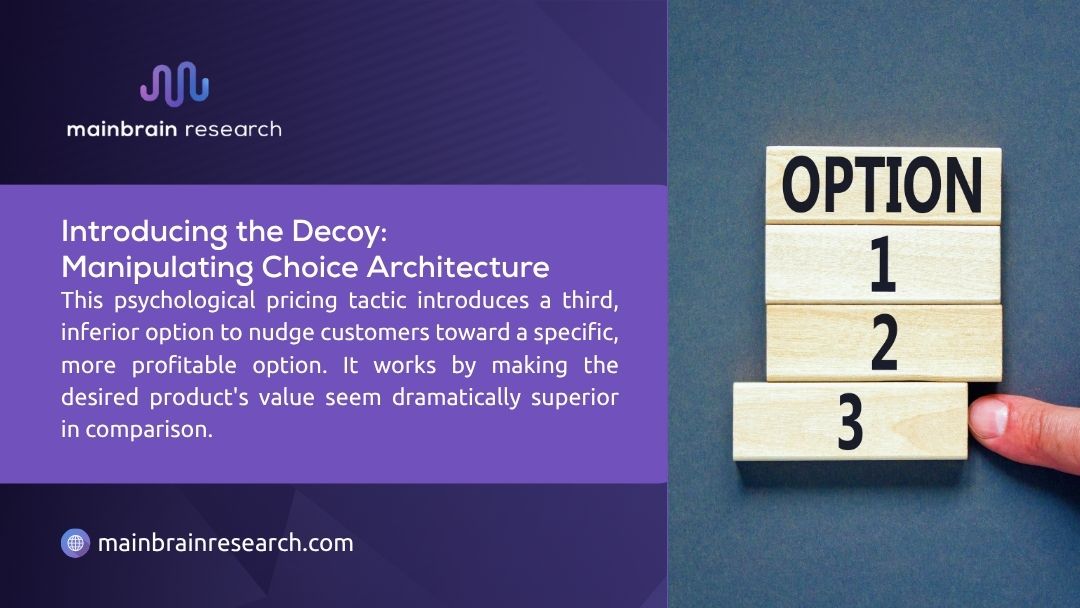
From Data to Decisions
Getting your Van Westendorp pricing questions right is just step one. The real impact comes from how you interpret the findings. The model gives you the price band customers find comfortable, but it’s up to your team to align that with brand strategy, cost structure, and profit goals.
Premium brands often choose the higher end of the acceptable price range to reinforce exclusivity, while new entrants stay near the “good value” point to build early adoption.
At MainBrain, we use Logitivo, our AI-powered predictive analytics platform, to simulate how different price points affect revenue, churn, and market share. This fusion of pricing psychology and data science turns survey feedback into strategic forecasting.
You can see how this ties into broader quantitative market research approaches in our guide.
Why Startups Love Van Westendorp
Startups rarely have pricing history or large datasets, which makes this model invaluable. It gives founders quick, reliable feedback about perceived value before going live. Instead of guessing whether $9.99 or $14.99 is better, you can validate it with survey data that reflects how real users think.
Our team has helped SaaS, e-commerce, and health-tech startups pinpoint their sweet spot between affordability and credibility using this exact model. It’s affordable, fast, and, most importantly, rooted in actual consumer psychology.
If you’re building a product from scratch, here’s how to do market research for a startup.

The Final Take
In the end, pricing is not about what finance teams approve; it’s about what customers believe. The Van Westendorp pricing questions remain one of the most reliable ways to understand that belief system. They capture not just how much people will pay, but why they’ll pay it.
At MainBrain Research, we blend behavioral science, AI, and neuroscience to turn this pricing psychology into measurable business outcomes. If your team is ready to stop guessing and start pricing strategically, reach out to our experts today.
You can contact us here to discuss how a customized Van Westendorp price sensitivity analysis can help your brand find its perfect price point.